
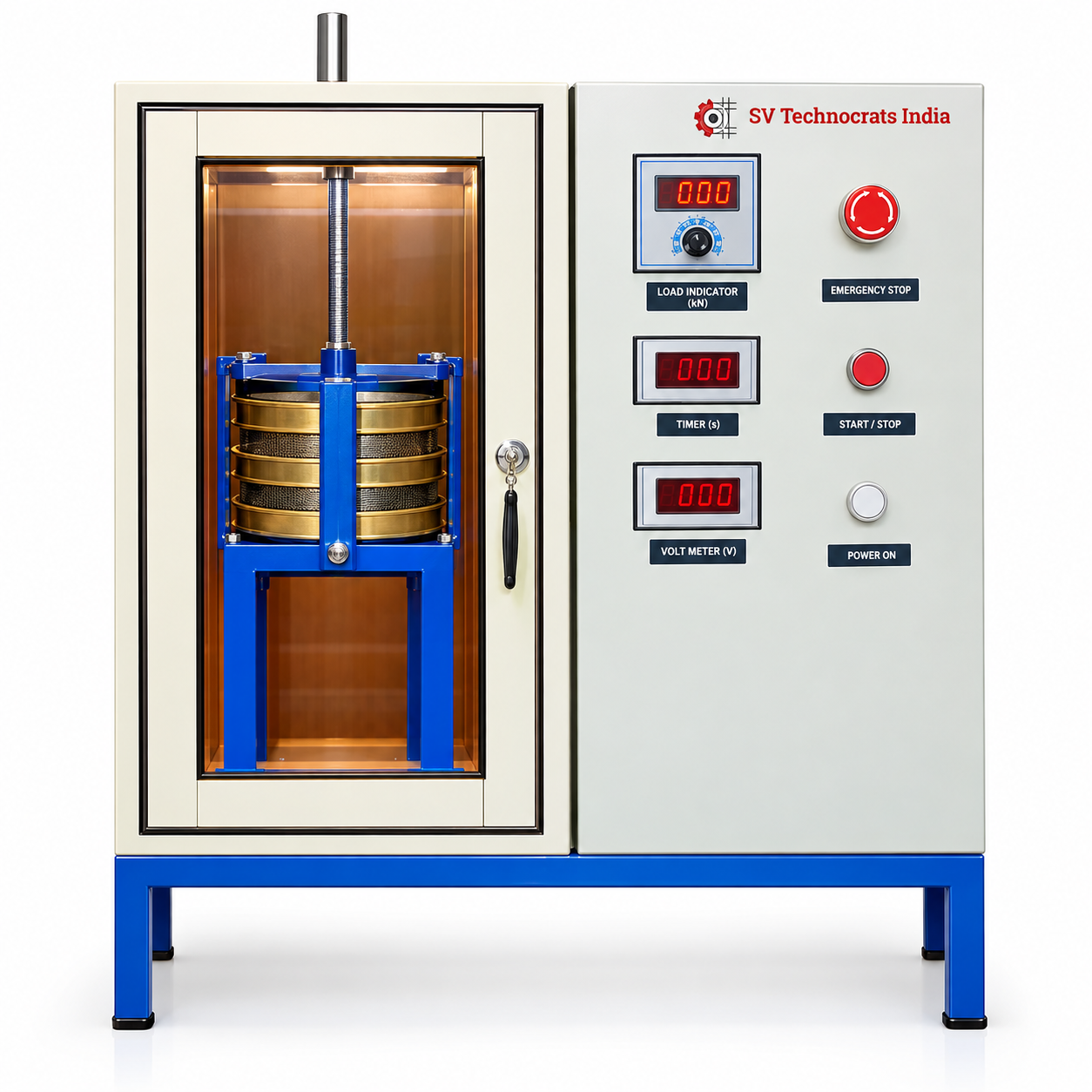
Description
Composite Wall Apparatus: Premier Thermal Engineering Equipment
Composite wall apparatus Manufactured by SV Technocrats India — Pune, Maharashtra
Understanding heat transfer across multi-layered materials is essential for modern thermal engineering. Consequently, the composite wall apparatus serves as an indispensable laboratory tool designed to analyze thermal conductivity, individual thermal resistance, and overall heat transfer coefficients under steady-state conditions.
As India’s leading heat transfer laboratory equipment manufacturer based in Pune, Maharashtra, SV Technocrats India delivers high-precision composite wall apparatus setups. Furthermore, our robust educational apparatus enables engineering students and researchers to accurately measure temperature gradients across diverse series and parallel material configurations.
Key Components of Composite Wall Apparatus
-
Electric Heat Source: Delivers a steady, controlled heat flux to one side of the multi-layered wall.
-
Multi-Layer Composite Wall: Includes diverse materials such as metals, ceramics, and insulation layers with known thermal properties.
-
Precision Temperature Sensors: Features embedded thermocouples or RTDs at material interfaces for real-time monitoring.
-
Integrated Cooling System: Uses a water-cooled jacket to sustain a continuous temperature gradient.
-
Thermal Insulation Outer Shell: Minimizes ambient heat losses, ensuring highly accurate experimental outcomes.
-
Data Acquisition System: Records temperature readings and power input parameters seamlessly.
Working Principle & Operational Steps
Initially, the electric heater provides a constant heat flux to start thermal conduction across the multi-layered material. Because each material layer possesses unique thermal resistance, a distinct temperature gradient quickly develops across the setup. Next, the apparatus reaches steady-state conditions, keeping temperature readings stable over time. Finally, precise sensors log interface temperatures so researchers can calculate individual thermal resistances and overall heat transfer coefficients efficiently.
Primary Applications
-
Academic Instruction: Helps engineering institutes demonstrate core thermal conductivity and heat transfer principles effectively.
-
Material Property Testing: Enables researchers to evaluate novel insulating materials and structural layers under realistic thermal loads.
-
Industrial System Design: Assists engineers in developing optimal thermal insulation systems for industrial equipment.