
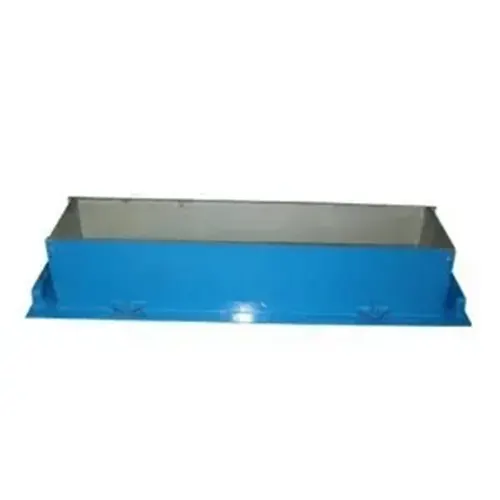
Description
Types & Sizes of Beam Moulds
The size of the beam specimen depends on the test standard:
Beam Size (mm) Test Standard Application
100 × 100 × 500 IS: 516 General concrete testing
150 × 150 × 700 IS: 516 High-strength concrete
40 × 40 × 160 ASTM C78 / ASTM C293 Cement mortar testing
Beam moulds are typically made of cast iron or steel, ensuring durability and precision.
Components of a Beam Mould
1. Rigid Mould Frame – Ensures accurate specimen shape.
2. Base Plate – Provides support and prevents leakage.
3. Side Clamps & Wing Nuts – Facilitate easy demoulding.
4. Handles (Optional) – For easy transport.
Testing Procedure Using Beam Mould
1. Preparation of Concrete Mix
• Prepare a concrete mix according to the design specifications.
• The mix should be homogeneous and meet workability requirements.
2. Casting the Specimen
• Apply mould release oil to prevent adhesion.
• Pour the concrete into the mould in two or three layers, compacting each layer with a tamping rod or a vibrating table.
3. Surface Finishing & Curing
• Level the surface using a trowel.
• Cover with a plastic sheet and store at 25°C ± 5°C for 24 hours before demoulding.
• Cure in water at 27°C ± 2°C for 7 or 28 days, depending on test requirements.
4. Flexural Strength Testing
• The beam specimen is tested in a flexural testing machine under third-point loading (ASTM C78) or center-point loading (ASTM C293).
• The modulus of rupture (flexural strength) is calculated using: f=PLbd2f = \frac{PL}{bd^2}f=bd2PL Where:
• P = Maximum applied load (N)
• L = Span length (mm)
• b = Beam width (mm)
• d = Beam depth (mm)
Applications of Beam Moulds
• Concrete Mix Design Validation – Ensures concrete meets flexural strength requirements.
• Pavement & Slab Testing – Used for road, bridge, and floor slab testing.
• Construction Quality Control – Ensures durability and load-bearing capacity of structures.